For HR and payroll teams, the New Labour Codes in India 2026 are no longer a legislative reform sitting on the distant horizon.
The four New Labour Codes in India 2026 were made effective from 21 November 2025, replacing and consolidating 29 Central labour laws. That means 2026 is the pivotal year when organisations across India must move from passive awareness to actively restructuring their payroll workflows, employee contracts, compensation policies, and compliance reporting.
Implementation does not mean arbitrarily inflating Basic Pay for every employee. The right approach in 2026 is to Review → Map → Model → Test → Validate → Implement.
{/* Modern Table of Contents */}- What Are India's Four New Labour Codes?
- What Has Actually Changed in 2026?
- The Biggest Payroll Change: Definition of Wages
- How the New Wage Definition Affects Salary Structure
- What Happens to PF Contributions?
- What Happens to Gratuity Calculations?
- What HR Teams Need to Change in 2026
- What Payroll Teams Need to Change
- What Employers Should Do Before Changing Salary Structures
- Impact on Employee Take-Home Pay
- Role of HRMS and Automated Payroll Software
- Common Mistakes Companies Should Avoid
- Practical Labour Code Compliance Checklist for 2026
- Frequently Asked Questions
What Are India's Four New Labour Codes?
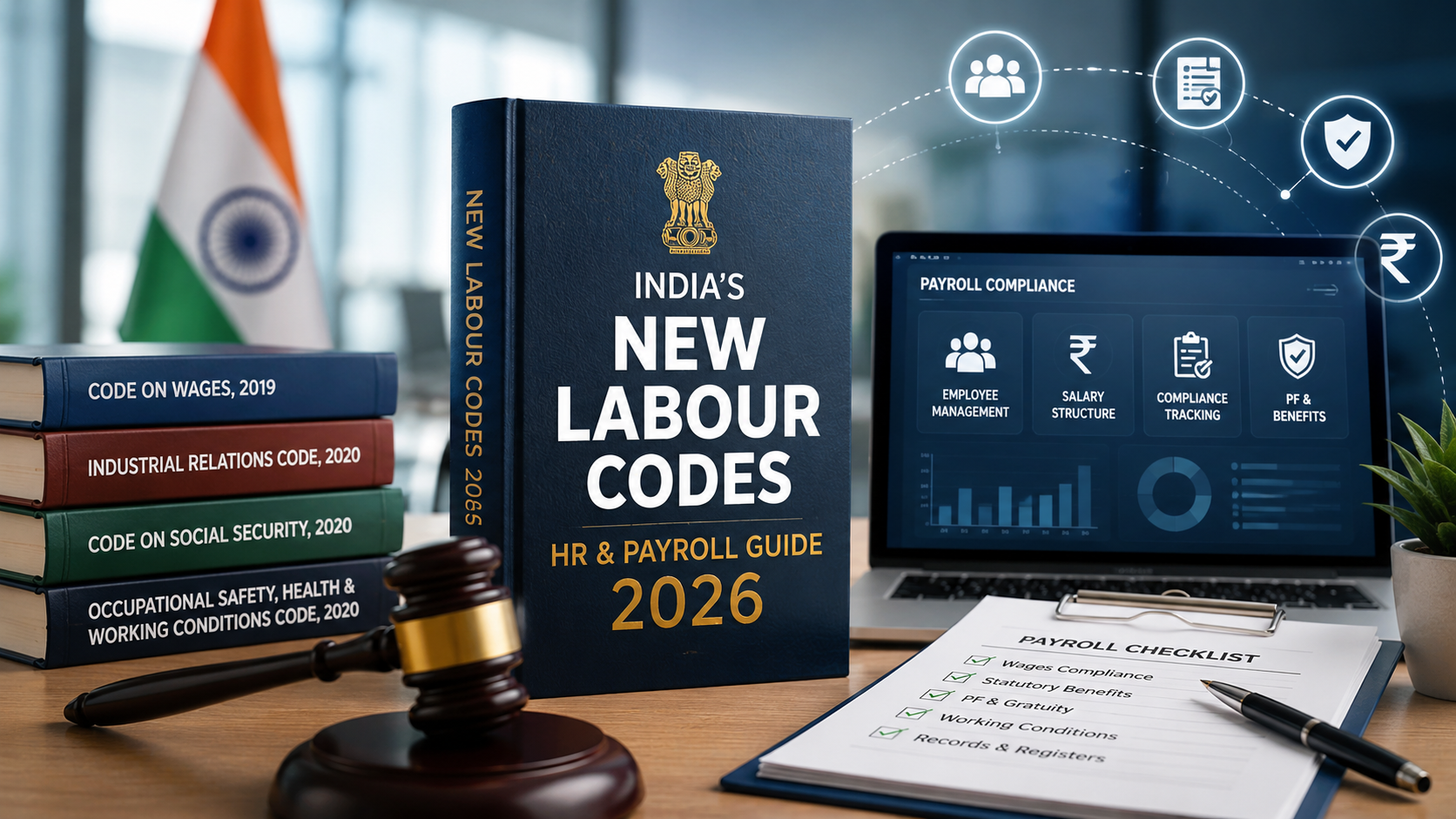
India has consolidated 29 archaic Central labour statutes into four simplified, unified Labour Codes designed to modernize workforce regulations:
| Labour Code | Primary Focus Area | Direct HR & Payroll Impact |
|---|---|---|
| Code on Wages, 2019 | Standardized wages, minimum wage floors, and payment deadlines | Universal wage definition, 50% allowance cap, and overtime rules |
| Industrial Relations Code, 2020 | Trade union recognition, standing orders, and dispute resolution | Standing orders threshold raised to 300 workers; retrenchment rules |
| Code on Social Security, 2020 | EPF, ESIC, gratuity, and gig/platform worker coverage | 1-year gratuity for Fixed-Term Employees; expanded social security |
| OSH & Working Conditions Code, 2020 | Workplace safety, health standards, and women in night shifts | Annual health checks, overtime consent, and statutory leave rationalization |
What Has Actually Changed in 2026?
Because the four codes became effective from 21 November 2025, compliance in 2026 is no longer theoretical. Organizations must continuously align with both Central Government notifications and state-specific rule enactments across Maharashtra, Karnataka, Telangana, Tamil Nadu, and Delhi NCR.
Indian enterprises must prioritize:
- Verifying the specific State Rules officially published for their operational branches
- Auditing salary and CTC structures against statutory wage definitions
- Recalibrating payroll software in India to simulate employer liability changes
- Upgrading employment contracts and appointment letters for fixed-term staff
- Synchronizing attendance management systems to capture exact working hours and overtime records
The Biggest Payroll Change: Definition of Wages
The central pillar of the Code on Wages is a uniform, three-part statutory definition of "Wages" across all labour enactments:
- Inclusions: Basic Pay, Dearness Allowance (DA), and Retaining Allowance.
- Specified Exclusions: HRA, employer PF contribution, conveyance allowance, statutory bonus, medical reimbursements, and overtime allowances.
- The 50% Rule (Proviso): If the sum total of all excluded allowances exceeds 50% of total remuneration, the excess amount is automatically deemed to be "Wages" and must be added back to the wage base!
If Excluded Allowances > 50% of Gross Remuneration → Wages = Basic + DA + (Excluded Allowances - 50% of Gross)
How the New Wage Definition Affects Salary Structure
In past decades, many Indian companies kept Basic Pay artificially low (e.g., 20% to 30% of CTC) and loaded 70% into special allowances to minimise statutory Provident Fund and gratuity liabilities.
Under the New Labour Codes in India 2026, this practice is no longer viable. Salary structures must be systematically audited:
| Salary Component | Statutory Classification | HR & Payroll Action |
|---|---|---|
| Basic Pay | Included in Wages | Evaluate whether Basic + DA reaches 50% threshold |
| House Rent Allowance (HRA) | Specified Exclusion | Cap HRA so total exclusions do not cross 50% |
| Special Allowance | Subject to 50% add-back | Excess allowance beyond 50% gets taxed and counts toward PF |
| Employer PF (12%) | Statutory Exclusion | Excluded from remuneration when computing 50% limit |
| Gratuity Provision | Wage-Linked Liability | Higher wage base increases future gratuity payout obligations |
What Happens to PF Contributions?
Provident Fund contributions are directly influenced by the new statutory wage base:
- Employees with Wages ≤ ₹15,000/month: PF remains mandatory on total statutory wages. When wages increase due to the 50% rule, employee and employer PF contributions will rise accordingly.
- Employees with Wages > ₹15,000/month: Employers can either restrict statutory PF contributions to the ₹15,000 ceiling (₹1,800/month) or contribute on actual statutory wages as per company compensation policy.
What Happens to Gratuity Calculations?
Gratuity under the Code on Social Security, 2020 introduces two monumental shifts:
- Higher Base Wage: Gratuity is computed as
(15 * Last Drawn Wages * Tenure) / 26. Since the statutory wage base must now be at least 50% of gross pay, future gratuity payouts will increase noticeably for corporate white-collar workers. - Fixed-Term Employee (FTE) Eligibility: The traditional 5-year continuous service barrier has been lowered to just 1 year for fixed-term contractual staff on a pro-rata basis! This requires HR teams to maintain precise Full & Final settlement (F&F) records.
What HR Teams Need to Change in 2026
Human Resources leaders must treat Labour Code readiness as a cross-functional business priority:
- Revise Employment Contracts: Update standard appointment letters to clearly specify wage components and statutory inclusions.
- Audit Fixed-Term Contracts: Tag fixed-term employees in your employee master database to automate 1-year gratuity provisions.
- Overtime & Shift Compliance: The OSH Code mandates formal employee consent for overtime and strict limits on continuous working hours.
- Annual Health Checkups: Establish annual health examinations for employees above statutory age thresholds.
- Streamline Leave Policies: Synchronize annual earned leave encashment and carry-forward rules with leave management policies.
What Payroll Teams Need to Change
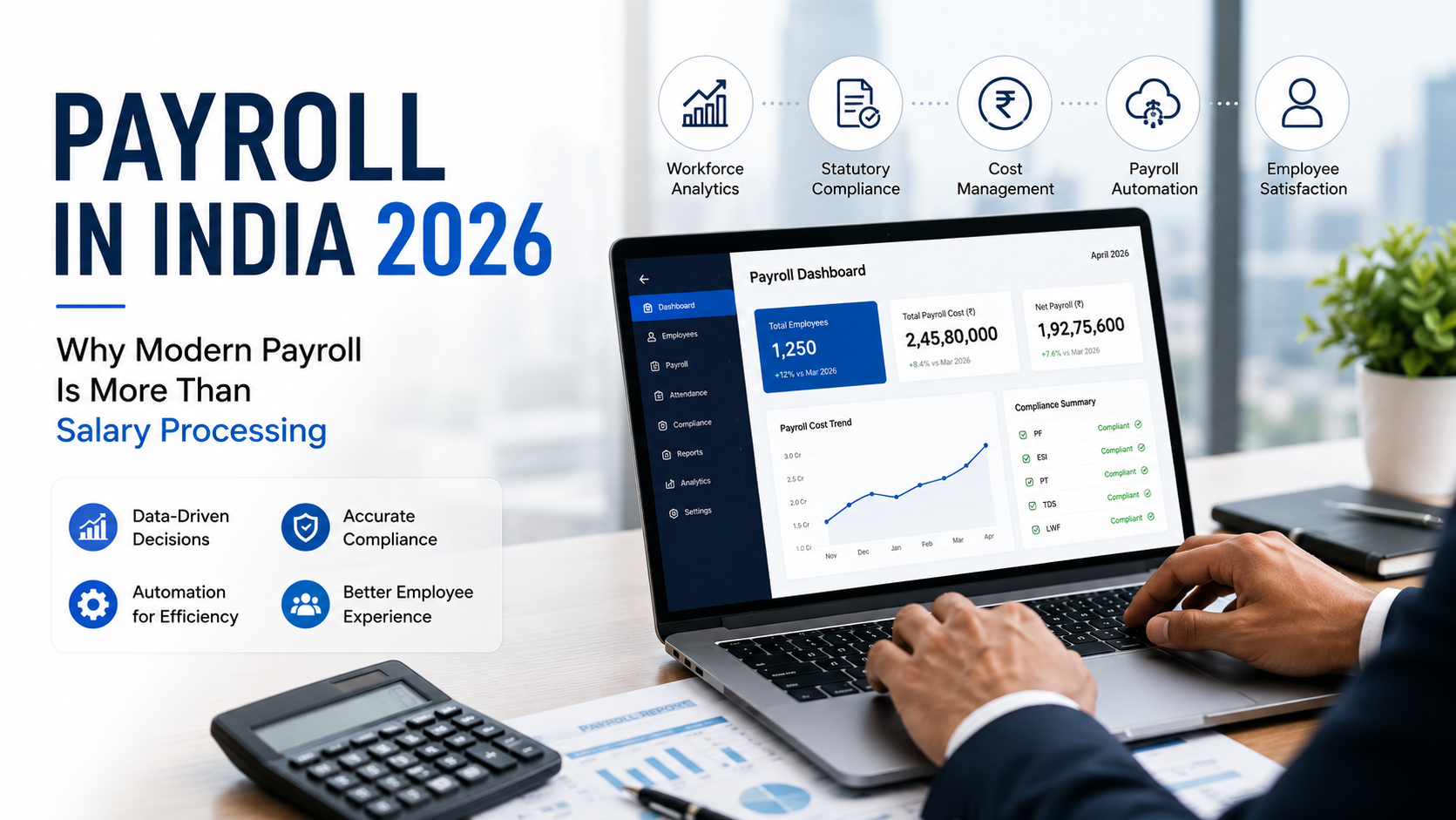
Payroll managers must transition away from brittle Excel formulas toward configurable cloud software:
- Configure the 50% allowance rule check within your payroll management software.
- Test parallel payroll runs comparing legacy CTC payouts versus the new statutory wage framework.
- Generate detailed HR MIS cost impact reports for the CFO and executive board.
- Enable transparent tax computation sheets on the employee self-service portal.
What Employers Should Do Before Changing Salary Structures
Rushing into salary restructuring without financial modeling creates unnecessary payroll errors. Employers should execute the following 5-step roadmap:
- Conduct a Component Audit: Itemize every earning and deduction head currently in your payroll system.
- Simulate Total CTC Cost: Quantify the exact increase in employer PF and gratuity funding required across all job bands.
- Assess Employee Take-Home Pay: Determine how higher employee PF deductions will affect monthly in-hand compensation.
- Evaluate Cloud HR Software: Compare modern HR software pricing plans to replace manual spreadsheets with an automated platform.
- Communicate Transparently: Issue clear FAQs to reassure employees that higher retirement contributions strengthen their long-term financial security.
Impact on Employee Take-Home Pay
Employees frequently ask: "Will my in-hand salary reduce under the New Labour Codes?"
The answer: Monthly take-home pay may experience a slight reduction, but total retirement savings will substantially expand. Because statutory contributions to EPF, EPS, and gratuity are tied to a higher wage base, employees accumulate significantly larger long-term nest eggs and pension benefits upon retirement or job exit.
Role of HRMS and Automated Payroll Software
Managing multiple state rules, complex wage add-backs, overtime caps, and pro-rata gratuity manually in spreadsheets is an operational risk. Modern cloud HRMS software automates:
- Dynamic wage base computation with automatic 50% excess allowance reallocation
- Automated ECR file generation for EPFO and monthly ESIC filings
- Real-time sync between attendance rosters, biometric logs, and monthly pay runs
- Instant export of compliance registers for statutory labor inspections
Common Mistakes Companies Should Avoid
- Applying a Blanket 50% Basic Pay: The law governs the total wage base, not Basic Pay in isolation.
- Copying Unverified Online Templates: Salary models must reflect your company's specific benefits and state applicability.
- Overlooking Fixed-Term Gratuity: Failing to provision for 1-year contract gratuity creates unexpected balance sheet shortfalls.
- Delaying Software Migration: Relying on outdated Excel files during an official statutory audit risks penalties.
Key Takeaways for HR & Finance Leaders
- The New Labour Codes in India 2026 are officially active, consolidating 29 Central labour enactments into 4 unified codes.
- The 50% wage definition requires all excluded allowances exceeding half of gross pay to be added back into wages.
- Fixed-term contractual workers are now entitled to gratuity after just 1 year of continuous service.
- Automated HRMS and payroll software eliminate calculation errors and safeguard companies against compliance penalties.
Frequently Asked Questions
1. When did the New Labour Codes in India 2026 become effective?
The four Labour Codes became officially effective from 21 November 2025, making 2026 the active implementation year for all Indian businesses.
2. What is the 50% wage rule under the Code on Wages?
The rule states that if the sum of all excluded allowances (like HRA, conveyance, and bonus) exceeds 50% of gross pay, the excess is automatically treated as wages for PF, ESI, and gratuity calculations.
3. Are fixed-term employees entitled to gratuity under the new codes?
Yes. Fixed-term employees (FTEs) qualify for pro-rata gratuity after completing just 1 year of service, rather than the standard 5-year tenure.
4. How can organizations prepare for compliance?
Conduct a salary structure audit, simulate cost impacts on PF and gratuity, update employee contracts, and adopt an integrated cloud HRMS platform like HR Niti.
Disclaimer: This article is intended for general informational purposes and should not be construed as legal counsel. Employers should consult qualified labour-law attorneys and official government notifications before executing compensation restructuring.